ISSN : 2249 - 7412
Asian Journal of Plant Science & Research
Antibacterial Activity of Vasaka Plant against Microorganisms
Bharti Bhaware*
Department of Ayurvedic, D. Y. Patil College of Ayurved and Research Centre, Maharashtra, India
- *Corresponding Author:
- Bharti Bhaware
Department of Ayurvedic, D. Y. Patil College of Ayurved and Research Centre, Maharashtra, India
E-mail:bhartibhaware.bbb@gmail.com
Received date: December 16, 2023, Manuscript No. AJPSKY-24-18214; Editor assigned date: December 19, 2023, PreQC No. AJPSKY-24-18214 (PQ); Reviewed date: January 04, 2024 QC No. AJPSKY-24-18214; Revised date: April 07, 2025, Manuscript No. AJPSKY-24-18214 (R); Published date: April 14, 2025, DOI: 10.36648/2249-7412.15.1.318
Citation: Bhaware B (2025) Antibacterial Activity of Vasaka Plant against Microorganisms. Asian J Plant Sci Res Vol:15 No.1:318
Abstract
The antibacterial activity of Vasaka (Adhatodavasica), a medicinal plant commonly used in traditional medicine, has been investigated for its potential to combat various pathogenic microorganisms. This plant is known for its bioactive compounds, including alkaloids, flavonoids, and saponins, which are believed to contribute to its antimicrobial properties. Studies have demonstrated that extracts of Vasaka exhibit significant inhibitory effects against a range of bacteria, including both gram-positive and gram-negative strains, such as Staphylococcus aureus, Escherichia coli, and Pseudomonas aeruginosa. The plant’s antibacterial efficacy is attributed to its ability to disrupt microbial cell membranes, inhibit protein synthesis, and interfere with cellular metabolism. These findings support Vasaka as a promising candidate for developing natural antibacterial agents. Further research, including isolation of specific bioactive compounds and clinical trials, is essential to validate its therapeutic potential and to explore its use as an alternative to conventional antibiotics in treating bacterial infections.
Keywords
Acanthaceae; Vasaka; Arusha
Introduction
Adhatodavasaka a member of the family Acanthaceae commonlly called as “Vasaka” or “Arusha”. It is an important medical, found in India and utilized in rural a red for several ailments. Vasaka plant perennial evergreen and highly branched with unpleasant small and bitter taste, the plant lives for multiple seasons and retains its leaves throughout the year. It is a shrub having 1.0 -2.5 m high with opposite ascending branches [1].
The drug contain stem, leaf, flower fruit and seed, vasaka is abitter “Ouinazoline” alkaloid, the major alkaloids are “Vasicine” and “Vasicinone” which is present in all parts of the plant. The leaves contain several alkaloids (vasicinone, vasicind, adhatodine, adatodine, adravasinone, anisotine and peganine).
This plant has medical uses, mainly antispasmodic, fever reducer, anti-inflammatory anti bleeding, bronchodilator, antidibetic, anti-jaundice, antiseptic, disinfectant and has many other medical applications. There is a considerable demand of this plant in India and this demand is met from natural habitat [2].
Plant tissue and cell culture system are being explained for the accumulation of the variety of natural produce [3]. The tissue culture system for a number of medical plants have been established, and this enables the analysis of callus and suspension for the presence of the various “secondary metabolites” (Figure 1) [4-8].
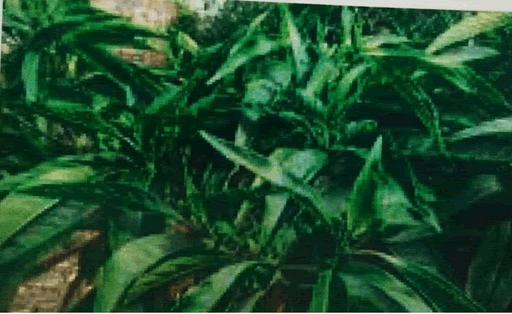
Figure 1: Adhatoda vasaca.
Materials and Methods
• Collection: The leaves of Adhatoda vasaca were collected from the International Plant Medical Garden and Nursery Research, India, Maharshtra.
• Solvent used: The extraction method employed here is 50 gm of the plant extracts were successively extracted with solvent like methanol basing on their order of pdarity using soxlet apparatus.
• Test organisms: S. aureus, S. typhi and E. coli.
• Inoculum medium: Pure culture of S. typhi, S. aureus and E. coli was grown a nutrient broth and incubated at 37°c for 24 hrs.
• Coloum chromatography.
• High Performance Liquid Chromatogrphy (HPLC).
Procedure (methods)
Preparation of leaf extract:
• 10 gm of fresh vasaka leaves were weighed accurately. Leaves from one of the packets were grinded to make the extract with methanol.
• The extract was then filtered to get a clear solution, devoid of any leaf debris. It was kept in a conical flask, and stored in room temperature.
Detection of zone of inhibition of vasaka extract
• In four autoclaved test tubes inoculation of four different bacterial strain was done separately and aseptically in 5 ml of nutrient broth. Pure culture of the 4 different microorganisms was used as inoculums.
• The test tubes were incubated in the incubator all 37° for 24 hrs to allow growth to occur.
• 0.2 ml of each bacterial culture were spread in 6 sterile plates containing nutrient agar.
• In the hole made at the centre of each plate 50 ul of vasaka extract was added, in the other phosphate buffer was added.
• The later several as the centre the plate were incubated at 37°C in the incubator for 24 hrs.
Detection of zone of inhibition of Vasaka extract
After 24 hrs the plates were observed (Figures 2 and 3).
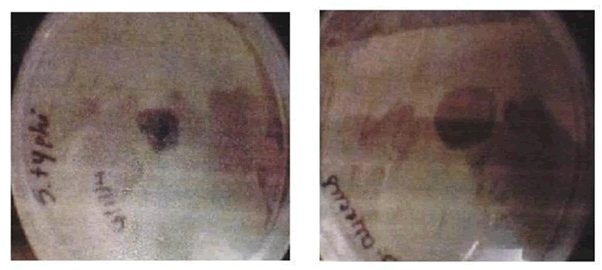
Figure 2: Zone of Inhibition of S. typhyi and S. aureus.
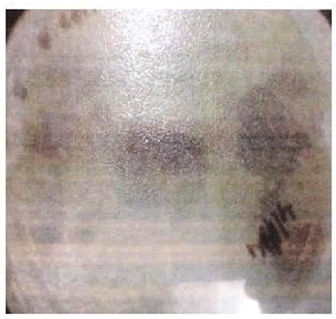
Figure 3: Zone of inhibition of E. coli.
The methanollic extract of vasaka leaves exhibited broad spectrum of antibacterial activity. In the presence study S. typhi, S. aureus was sensitivity to the methanolic extract at vasaka leaves with 0.4 dm 0.5 dm zone of inhibition aseptically. In E. coli was shown the respectively 2 cm to l cm zone of inhibition aseptically.
In E. coli was shown the respectively 2 cm to 1 cm zone of inhibition [9].
Coloumn chromatogrphy
The columns are usually made up glass and polyacrylate plastic (glass burette).
Laboratory column usually have a diameter of 2-70 mm and length 15-150 cm length shorter than 15 cm.
• Packing the coloumn: This constituent a very critical factor in achieving satisfactory separation.
• This coloumn is fitted in the upright position and it bottom is seated with glass wool (cotton) such other support.
• The column is now filled to about one third its height with the mobile phase and also used molecular sieves (to adsorbent)
• (Mobile phase=ACN+Water) 60: 40
• Then leaf extract sample was added 1 ml in a column.
• Then sample was collected around 10 min and check the sample which shown antibacterial activity and all the sample were collected around 15 test tube and check each activity.
The mobile phase extract of vasaka leaves exhibited broad spectrum of antibacterial activity in the present study S. typhi, S. aureus, E. coli was sensitive to the mobile phase extract of vasaka leaves with 4 cm and 6 cm zone of inhibition respectively (Figure 4).
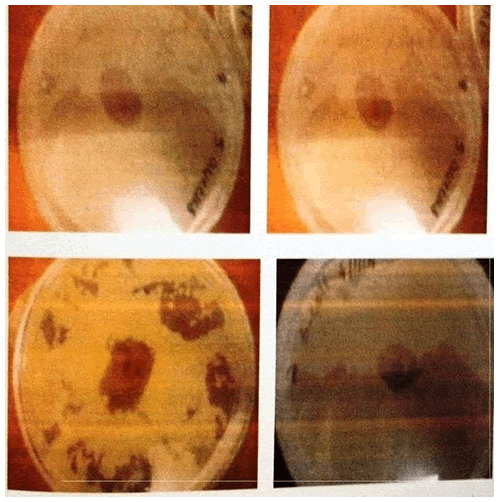
Figure 4: Zone of inhibition of S. typhyi, S. aureus, E. coli.The TLC is one of the techniques of chromatography and each principle are same in the separated compound by molecular weight.
Material
TLC plate
Solvent system: Acetonitrile: Methanol: Water= 1.5:1.5:0.25
Take TLC plate solvent for that use solvent (mobile phase) as these above conclusion.
Then TLC plate and to spot are draw and add a using capillary tube two spots of sample were collected by coloumn and one it’s standard extract sample.
Then put in there plate in solvent system which is and put the plate proper and check the spot and compared it.
Results and Discussion
The coloumn and TLC plate 0.15 chromatography 6, 9, 11 no. of tube sample shown the properly band and after check that no. of sample were collected by coloumn is shown by antibacterial activity (Figure 5).
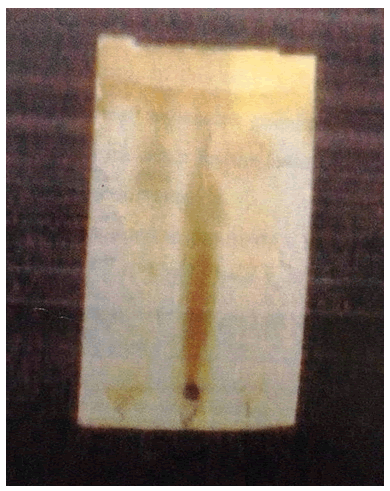
Figure 5: TLC plate separation.
High Performance Liquid Chromatography (HPLC)
In normal phase HPLC, the column is filled with tiny silica particles and solvent is non-polar. Polar compound is the mixture being passed through the column will stick longer to polar silica than non-polar compound will. The non polar once will therefore pass more quickly through the column.
In reverse phase HPLC, the column filled with silica is modified to make it non-polar by attaching hydrocarbon chain to its surface. Polar solvent is used. e.g.: A mixture of water and ethanol. In this case, there will be strong attraction between the polar solvent and polar molecules present in the, mixture being passed through the column. Polar molecule in the mixture will therefore spend most of their time moving with the solvent.
Non-polar compound in the mixture will tend to form attraction with hydrocarbon groups because of van der Waal’s dispersion forces. This means that it is polar molecule that will travel through the column more quickly. Reverse phase HPLC is most commonly used form of HPLC.
Preparation of HPLC
HPLC was carried out for the separation of compounds present in the vasaka leaves extract. This extract was first separated as per colour and time by general column chromatography. Then two samples of colour wise separation and one sample of time wise separation which had shown antibacterial effect were chosen for HPLC. Mobile phase used was acetonitrile. The results were observed as per graph (Figure 6).
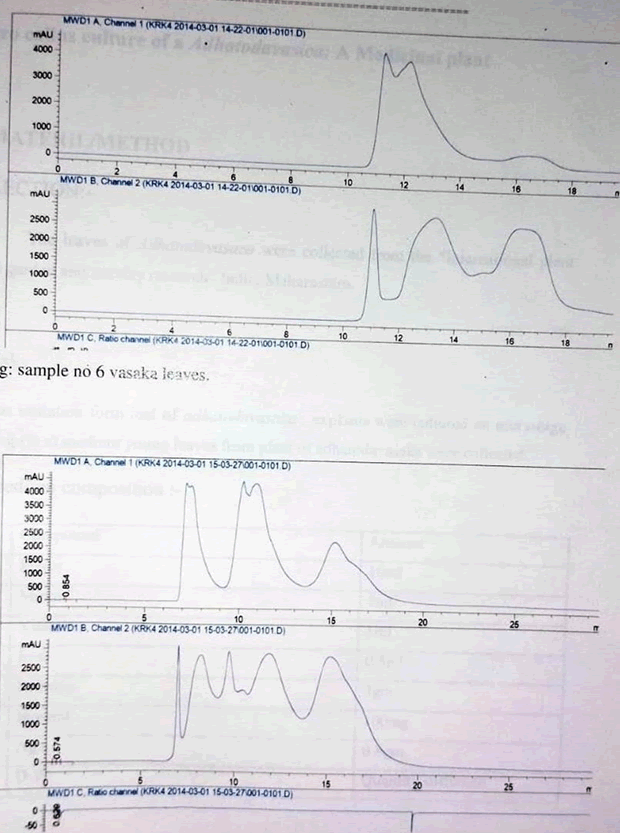
Figure 6: Zone of inhibition of S. typhyi, S. aureus, E. coli.
In vitro callus culture of a Adhatoda vasica: A medicinal plant
Collection
The leaves of Adhatodavasaca were collected from the “International Plant Medical Garden and Nursery Research” India, Maharashtra.
Material
For callus initiation form leaf of adhatodavasaka, explants were cultured a murashige and skoog (m.s) medium young leaves from plant of adhatodavasaka were collected.
Method
• While working inside laminar flow.
• Explants washed under running tab water.
• Explants were immersed in a Biavistin for ½ hrs. washed in water one or two time.
• After again washed with sterile D/W in 2-3 time.
• Then surface sterilized with ethanol treated for l min.
• Then again washed explants with sterile D/W for 2 times.
• Explants were immersed in a twin or detergent for 30 sec. then explants were washed thrice with sterile D/W.
• Then surface sterilized explants treated with Hgcl, for 1 minute. again wash explants with 1-3 times the sterile surface leaves cut in to small pieces.
• The cut segments were then cultured individually an MS medium containing 2-4 D (100 ul) were added. PH of the medium was adjusted 5.7 to 5.8.
• The medium was autoclaving at 121°C for 20 minutes at 15 DSi.
• The cut segment transfers the MS medium before and after each transferred material.
• Forceps and scalpel washed with spirit & also burn with the help of spirit lamp.
• The cut segment transfers the MS medium it was kept in 16 hrs light dark reaction.
• After 15-21 day callus culture it was observed.
Different solvent extract of Adhatoda vasica exhibited the antimicrobial activity against isolated pathogens.
Adbatodavasica has the antibacterial activity against gram positive and gram negative bacteria. The methanol extract of Adhatoda vasica exhibited high activity against the tested organisms rather than aqueous extract of Adhatoda vasica [10]. This is an agreement with the current study (i.e.,) Adhatoda vasica showed the antimicrobial activity against Staphylococcus aureus, Escherichia coli, and which also exhibited the highest activity inmethanol extract than the aqueous extract. (The crude extracts obtained from the leaf of Adhatoda vasica using solvents of vary polarity such as ethanol, petroleum ether and water extracts exhibited the activity against Staphylococcus aureus, Escherichia coli. The result from the current study Adhatoda vasica showed the better activity in ethanol, diethyl ether and water against gram positive and gram negative organisms (Figure 7).
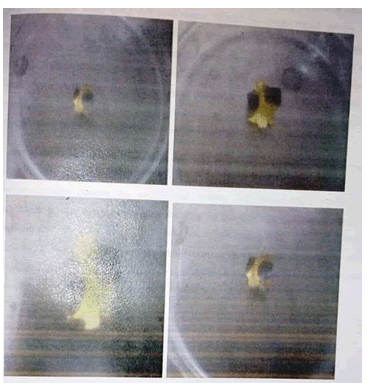
Figure 7: Callus formation of Vasaka leaves.
| C11H12N20 | Vasicine | M. wet 188.2257 g/mol |
| C11H10N202 | Vasicinone | M. wet 202.2093 g/mol |
| C8H8N2 | Quinazoline | M. wet 930.15 g/mnol |
Table 1: Molecular weights and formulas of Vasicine, Vasicinone, and Quinazoline.
| Kingdom | Plantae |
| Division | Angiosperm |
| Class | Eudicots |
| Order | Lamiales |
| Family | Acanthaceae |
| Genus | Justicia |
| Species | J. adhatoda |
| Binomial name : Justicia adhatoda | |
Table 2: Taxonomic classification of Justicia adhatoda from kingdom to species.
| Name of strain | Solvent use for extraction | Zone at inhibition of in cm | Antibacterial activity |
| S. aureas | Methanol | 1 cm, 0.5 cm | ++ |
| S. typhi | Methanol | 0.4 cm | + |
| E. coli | Methanol | 2 cm, 1 cm | +++ |
Table 3: Antibacterial activity of methanol extracts against bacterial strains.
| Names of strain | Solvent use for extraction | Zone at inhibition of in cm | Antibacterial activity |
| S. typhi | Methanol | 6 | ++++++ |
| S. aureus | Methanol | 4 | ++++ |
| E. coli | Methanol | 2 | ++ |
Table 4: Methanol extract showing antibacterial activity against selected bacterial strains.
| Sr. no | Compound | Amount |
| 1 | Major | 10 ml |
| 2 | Minor | 1 ml |
| 3 | Vitamins | 1 ml |
| 4 | Iron | 0.5 ml |
| 5 | Sucrose | 3 gm |
| 6 | Inositol | 100 mg |
| 7 | Agar | 0.8 gm |
| 8 | D/W | - |
Table 5: Composition and quantity of ingredients used in formulation preparation.
Conclusion
Adhatodazeylanica posses’ important activities like antitisssue, antibacterial, antiulcer, abortifacient, and antioxidant. This is an agreement with findings of this study Adhatoda vasica showed the antibacterial activity. Adhatodazeylanica exhibited the antimicrobial activity against various organisms by means of agar diffusion method. Then findings from the current study Adhatoda vasica plant extract exhibited the antimicrobial activity against three pathogens like Staphylococcus aureus, Escherichia coli. To initiate from leaf explants, explants were grown on different combination and concentrations of growth regulators. The callus culture formation was observed in 15-21 days.
References
- Ahmad I, Khan MN (1998) Antimicrobial activity of Adhatoda vasica against clinical pathogens. J Ethnopharmacol 2:83-88
- Anuradha A, Rajan K, McConnell MS (2010) Feeding deterrence activity of Adhatoda vasica L. against Spodoptera litura (Fab.). J Biopest 3:286
- Palasuwan A, Soogarun S, Lertlum T, Pradniwat P, Wiwanitkit V (2005) Inhibition of heinz body induction in an in vitro model and total antioxidant activity of medicinal Thai plants. Asian Pac J Cancer Prev 6:458
[Google Scholar] [PubMed]
- Cordell GA (2011) Sustainable medicines and global health care. Planta Med 77:1129-1138
[Crossref] [Google Scholar] [PubMed]
- Maroyi A (2018) Nutraceutical and ethnopharmacological properties of Vangueria infausta subsp. infausta. Mol 23:1089
- Abbas RK, Fadlelmula AA, Elsharbasy FS (2016) Cytotoxicity of crude amino acids of four sudanese cultivars of Hibiscus sabdariffa grown in Sudan. Int J Appl Chem 12:689-697
- Bose D, Chatterjee S (2015) Antibacterial activity of green synthesized silver nanoparticles using Vasaka (Justicia adhatoda L.) leaf extract. Indian J Microbiol 55:163-167
[Crossref] [Google Scholar] [PubMed]
- Shahzad Q, Sammi S, Mehmood A, Naveed K, Azeem K, et al. (2020) Phytochemical analysis and antimicrobial activity of Adhatoda vasica leaves. Pure Appl Biol 9:1654-1661
- Latha M, Priyanka M, Rajasekar P, Manikandan R, Prabhu NM (2016) Biocompatibility and antibacterial activity of the Adathoda vasica Linn extract mediated silver nanoparticles. Microb Pathog 93:88-94
[Crossref] [Google Scholar] [PubMed]
- Khursheed A, Devender P, Ansari SH (2010) Phytochemical and pharmacological investigations on Adhatoda zeylanica (medic.): A review. Pharmacogn 2:513-519

Open Access Journals
- Aquaculture & Veterinary Science
- Chemistry & Chemical Sciences
- Clinical Sciences
- Engineering
- General Science
- Genetics & Molecular Biology
- Health Care & Nursing
- Immunology & Microbiology
- Materials Science
- Mathematics & Physics
- Medical Sciences
- Neurology & Psychiatry
- Oncology & Cancer Science
- Pharmaceutical Sciences