


 2 / 4
2 / 4

EuroSciCon Conference on Virology and Infectious Diseases
April 22-23, 2019 | Athens, Greece
Page 38
Archives of Clinical Microbiology
ISSN: 1989-8436
Virology and Infectious Diseases 2019
P
rotozoa of the Trypanosomatidae family comprise a large number of
species that are pathogenic for humans and animals of veterinary
interest. These include diseases such as Chagas disease, highly prevalent
in Latin America, Sleepness disease, prevalent in part of Africa (subsaharian
region) and leishmaniasis, which can be found in almost all continents. Here,
we will show how the use of microscopy techniques, especially transmission
electron microscopy (TEM), have given an important contribution to identify
potential structure and organelle targets, as well to identify the mains cell
sites affected by different compounds, thus contributing to the identification
of drug targets. In most of the cases, we will present examples based on
our own experience. Studies carried out using TEM have pointed out to
the presence in the trypanosomatids of some organelles that are unique
to these organisms. These include: the kinetoplast, which is located
within the unique mitochondria and located at the basis of the protozoan
flagellum. It consists of a complex network of DNA formed by concatenated
minicircles and maxicircles that together account for about 30% of the
total cell DNA. Disruption of this DNA array by drugs that intercalate with
the DNA kills the parasite. More recently efforts have been done by several
groups to characterize the various enzymes involved in the replication
of the kinetoplast DNA. We will show that compounds interfering with
topoisomerases are active against the parasites, even at low concentrations;
the endocytic pathway found in trypanosomatids is highly polarized, taking
place only through the flagellar pocket and/or in a structure known as
the cytostome, also localized in the vicinity of the flagellar pocket. This is
an interesting drug target since the parasites depends on the endocytic
Electron microscopy as a valuable tool
to identify potential new drug targets
for diseases caused by protozoa of the
Trypanosomatidae family
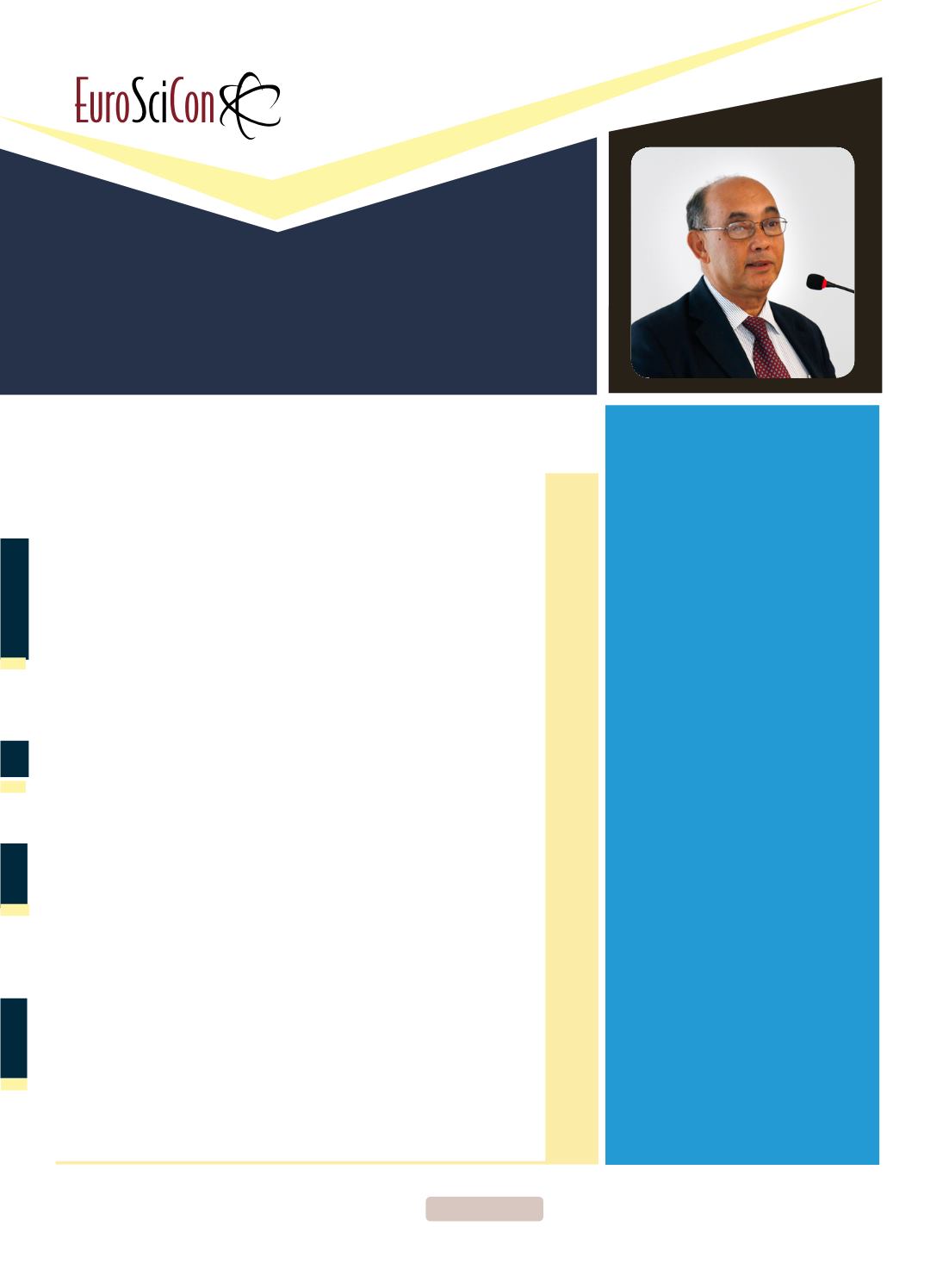
Wanderley de Souza
1
, Aline Zuma
1
and
Emile Barrias
2
1
Instituto de Biofísica Carlos Chagas Filho-UFRJ, Brazil
2
Instituto Nacional de Metrologia, Qualidade e Tecnologia (Inmetro), Brazil
Biography
Wanderley de Souza has graduated in Medicine
by the Federal University of Rio de Janeiro (1974),
Master in Biological Sciences (Biophysics) by the
Federal University of Rio de Janeiro (1976) and PhD
in Biological Sciences (Biophysics) by the Federal
UniversityofRiodeJaneiro (1978).He isaProfessor
at the Carlos Chagas Filho Institute of Biophysics
at UFRJ and Researcher at the National Center for
Structural Biology and Bioimaging at the same uni-
versity,hewasanExecutiveSecretaryof theMinistry
of Science, Technology and Innovation (MCTI) and
Secretary of Science and Technology of the State of
Rio de Janeiro when he created the Center for High-
er Distance Education of the State of Rio de Janeiro
(Cederj), which gave rise to the Open University of
Brazil. He was also the Director of the National Insti-
tute of Metrology, Quality and Technology (Inmetro),
Director of the Carlos Chagas Institute and Rector
of the Northern Fluminense State University Darcy
Ribeiro and State University of Zona Oeste, Campo
Grande. He is the Member of the National Acade-
miesofMedicine,BrazilianofSciencesandSciences
of the Third World. He has published more than 600
papers in reputed journals and has been serving as
Editorial Board Member of several journals.
wsouza@biof.ufrj.brWanderley de Souza et al., Arch Clin Microbiol 2019, Volume:10
DOI: 10.4172/1989-8436-C1-016