


 3 / 6
3 / 6

Journal of Infectious Diseases and Treatment
ISSN: 2472-1093
Clinical Pathology & Epidemiology 2019
Page 25
Clinical Pathology and Epidemiology
February 27-28, 2019 | Prague, Czech Republic
7
th
Euroscicon Conference on
T
he qualified expert assessment of potential environmental and health
risks connected to planned industrial, transport and other construction
activities becomes an indispensable part of their audit. Whereas the initial
phase of risk assessment, the identification of potential human exposure is
of pure scientific character, the actual risk assessment increasingly assumes
thearbitrary aspects (e.g. safety coefficients), risk communication, its control
and management by way of psychological aspects; the collective decision
making then becomes a hotly debated political issue. When evaluating
perception of environmental risks, psychosocial and psychosomatic factors
may be of fundamental importance. This is the case in particular where our
knowledge of the true health consequences of exposure to a given factor
is incomplete or its action is within the range of values where we do not
anticipate the measurable biological effect. This applies not only in the case
of the indoor environment related complains but also e.g. to that of non-
ionizing electromagnetic radiation and electro-ionic microclimate. A serious
consequence found in the syndrome of mass hysteria is the fact that due
to differently motivated disinformation, part of the population can suffer
from some psychosomatic symptoms. Those imply objective suffering
and deteriorating quality of life for those affected. The prevention of such
conditions can either be systematic: early educational or popularisation
campaigns, specific health education orientated to the development of
industrial, transportation, or other types of constructions, and integration of
the local civic activities in the program. The purpose of this should not be a
cheap belittling of the risk but a reasonable explaining of its acceptable rate,
and also the likely advantage to benefit from the realization of the structures.
Any later efforts to inform the public about the true state of affairs are
normally accepted with distrust and disbelief.
Risk perception and environmental
risk management in protection of
public health
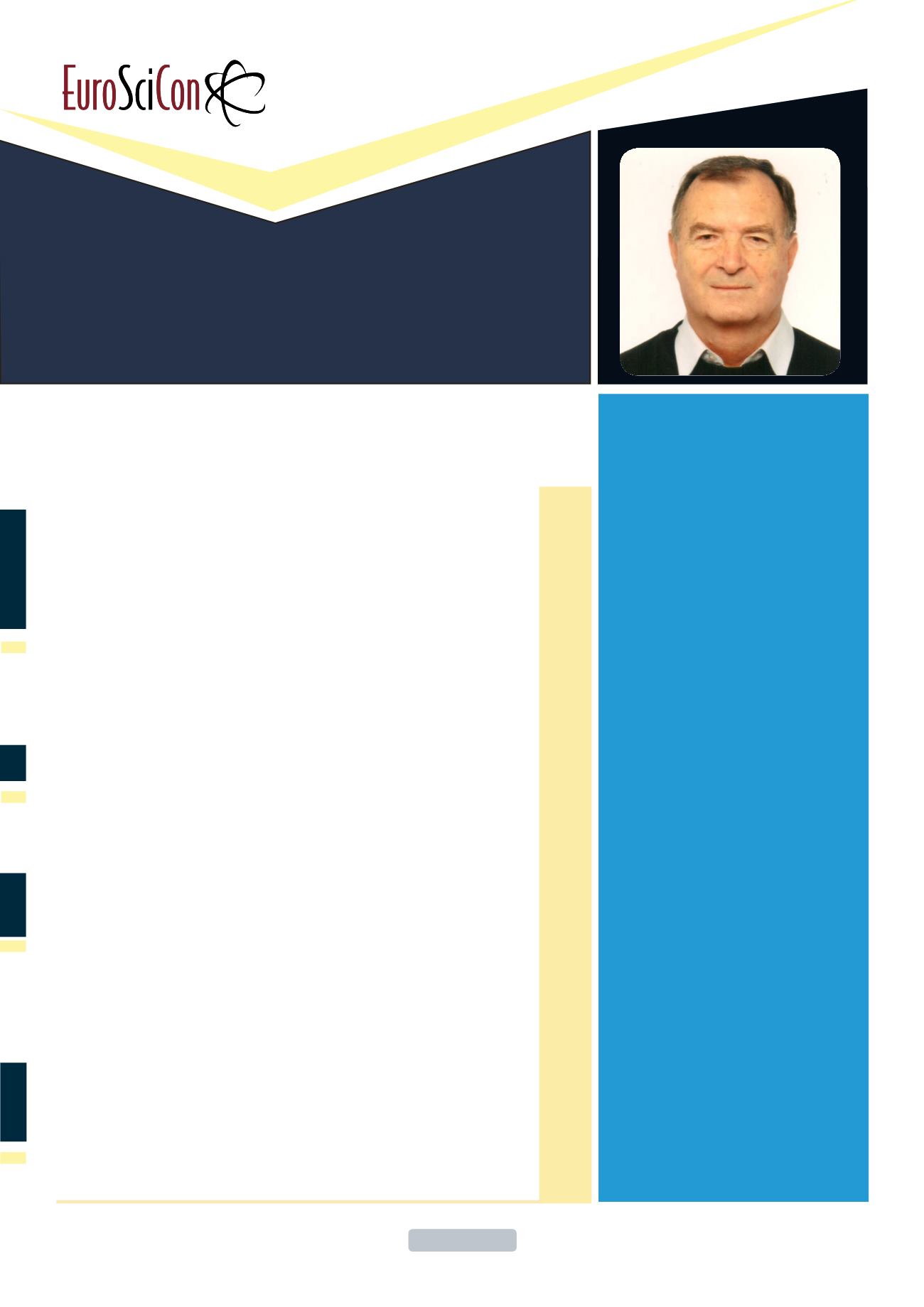
Vladimir Bencko, John M. Quinn
and Jana Zvarova
First Faculty of Medicine-Charles University, Czech Republic
Biography
Vladimir Bencko has graduated from the Medical
Faculty of Charles University in Prague in 1961.
He was appointed with the Institute of Hygiene
(presently the National Institute of Public Health)
from 1967-1972. He was an Assistant Professor at
the Chair of General and Environmental Hygiene,
Medical Faculty of Hygiene, Charles University from
1973-1986. Since 1972, he was temporary Advisor
of WHO. During 1990-1992, he was an Advisor to
the Federal Committee for Environment of CSFR.
Since 1993, he is temporary Consultant of the NATO
Committee on Challenges to Modern Society later
transformed into the present NATO Science for
Peace and Security. Since 2001 up to 2008, he is a
Representative of the Czech Republic in the Standing
Committee of the European Medical Research
Councils. He is a Founding Member of the Central
and Eastern European Chapter of International
Society of Environmental Epidemiology and in years
1999-2001 President elect of the Chapter.
vladimir.bencko@lf1.cuni.czVladimir Bencko et al., J Infec Dis Treat 2019, Volume: 5
DOI: 10.21767/2472-1093-C1-007